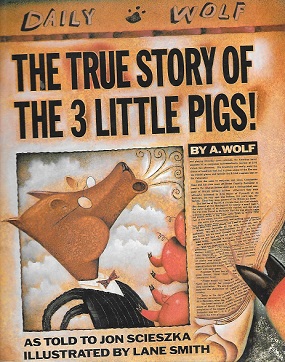
The article I read this week was about
the importance of print referencing during read-alouds. The main
goal of print referencing is to “engage emergent readers in
conversations about print that foster one's ability to consider
language an object of attention,” (Zucker,
Ward, & Justice, L. M 2009
pg 63). Writing and reading go hand in hand, as you
read aloud text in the classroom, you model how a writer and an
illustrator made a book using several pages linked together. Imagine
that, connecting pictures and words together one page at a time to
create an entire story! It is a concept that we sometimes take for
granted, but what a new world for children! Selecting text properly
is a large component of emergent writing. While reading, talking to
determine a text's purpose solidifies the child's thoughts and
opinions, allowing them to be involved while you as a teacher are
guiding them(Fountas
& Pinnell, 2011, pg 157).
Specific teacher language is highly supportive of young writers as
they expand their knowledge(Fountas
& Pinnell, 2011,pg 169).
Linking a child's prior knowledge to the new information that is
being presented is essential, so what do you say to the child then
exactly? The text also goes on to explain that you cannot plan
exactly what you will say when you have a conference with a young
writer, but you can research suggestions and customize them to
accommodate the student you are working with. Tapping into
experience during interactive writing helps to integrate a new skill
from an already strong interest in the child, so it is not something
you can plan for ahead of time as far as a script, but being informed
of the types of questions to ask is essential.
Written words are forever! Well,
almost, constructing the written message allows the words that you
have worked on together become concrete. Children are able to
reread, slowing down the processing therefore making it easier to
focus on the details. Building gradually and slowly is key to
identifying and constructing the sound and structure of letters.
Rereading also reinforces the letter and sound concepts, and is used
to allow authors to come up with new ideas as what to write
next(Fountas
& Pinnell, 2011, pg 158).
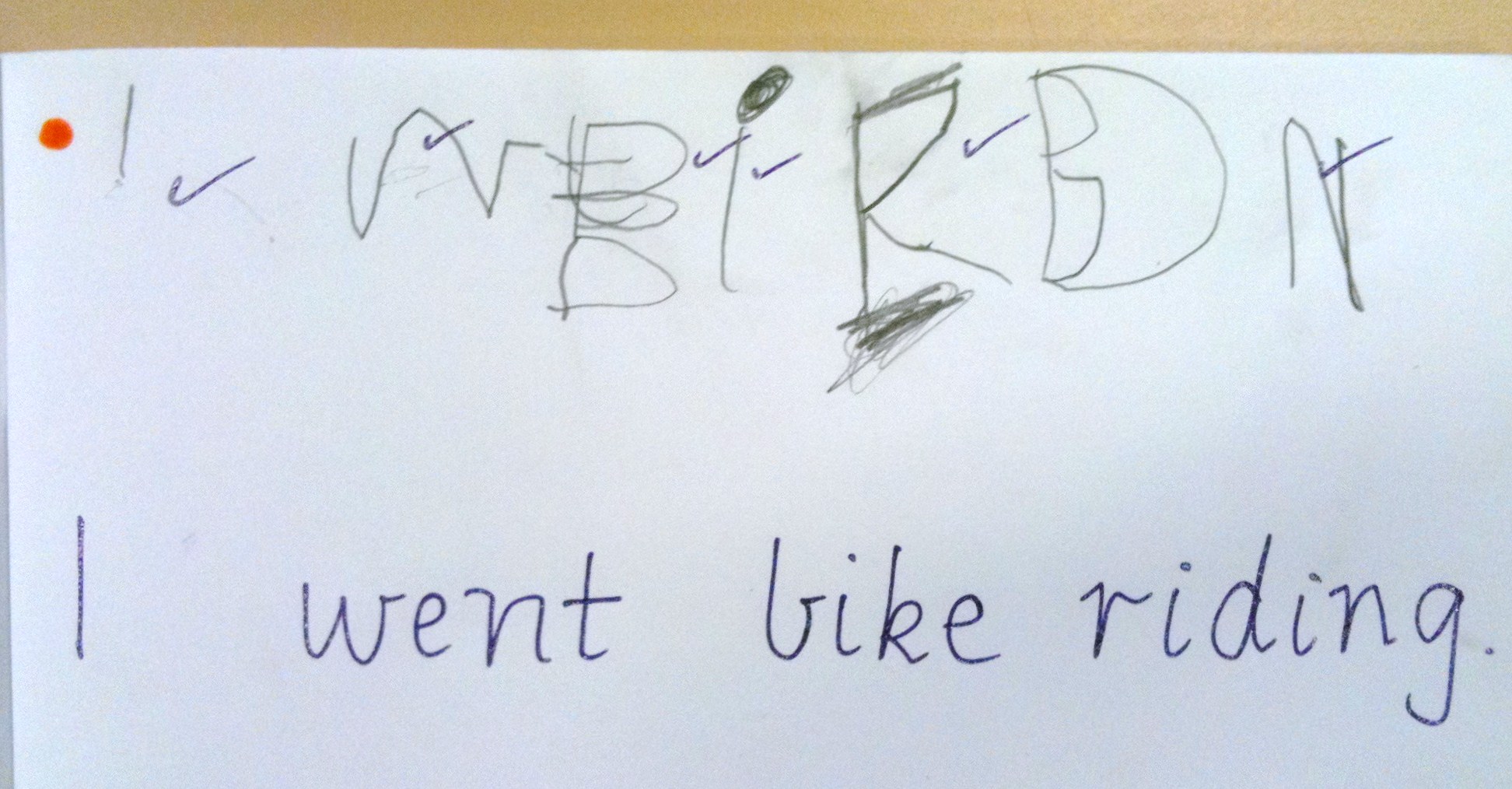
A beautiful and concise definition of
responsive teaching in the text on page 167, “Pose problems, ask
questions, and make comments and suggestions that stimulate
children's thinking and extend their learning.” Most importantly
the base skill of emergent writing comes down to teacher-child
interaction, we need to be a model to our students and exhibit proper
techniques to scaffold this imperative skill.
References
North
East Florida Educational Consortium. Emergent Writing-- Video
Accessed: June 25, 2017
Pinnell,
G. S., & Fountas, I. C. (2011). Literacy
beginnings: a prekindergarten handbook.
Portsmouth, NH: Heinemann.
Zucker,
T. A., Ward, A. E., & Justice, L. M. (2009). Print Referencing
During Read-Alouds: A Technique for Increasing Emergent Readers Print
Knowledge. The
Reading Teacher, 63(1),
62-72. doi:10.1598/rt.63.1.6